Physical Address
Bristol, United Kingdom
info@materialswelding.com
Physical Address
Bristol, United Kingdom
info@materialswelding.com

... Sharing knowledge to empower


Throughout history, warfare has reflected the dominant technology of its time. In the era of Hector of Troy, Achilles, Ajax the Great, Leonidas I of Sparta and during the Roman Empire, military success depended on physical strength, endurance, and close combat skill. Victory was determined by swords, spears, shields, and the human body itself.
This model collapsed with the invention of the gun and the bullet. Physical superiority became secondary. A single projectile could defeat the strongest warrior. The age of muscle based warfare ended not because soldiers became weaker, but because technology reshaped combat. Warfare moved from muscle to mechanism.
Today, nations preparing for conflict still rely on familiar instruments of war. Warships, armoured vehicles, combat aircraft, submarines, missile systems, artillery, and strategic infrastructure dominate defence budgets. On the surface, warfare appears unchanged, only more technologically complex and expensive.
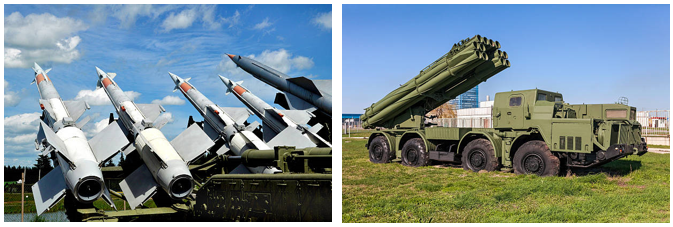

Recent conflicts, particularly the war between Ukraine and Russia, show that this perception is becoming outdated. The battlefield is already rapidly shifting.
Unmanned aerial systems, especially drones, have become the most decisive weapons of modern warfare. They are inexpensive relative to traditional platforms, rapidly deployable, scalable, and highly adaptable. More importantly, they have fundamentally altered the economics of war.
Multi million currency tanks, aircraft, and naval vessels are now destroyed by drones costing a fraction of their value. Even heavily defended assets such as combat helicopters and warships are vulnerable. Swarms of low cost unmanned systems can overwhelm advanced air defence and electronic warfare through numerical saturation. This represents a strategic transformation, not merely a tactical evolution.

Modern warfare is becoming unmanned, decentralised, and economically asymmetric. States can impose significant military effects without large standing armies or high personnel losses. Intellectual capability, manufacturing agility, and systems integration are replacing physical mass on the battlefield.
Targets once unreachable across thousands of kilometres can now be struck with precision. Static and moving targets alike are exposed. The battlefield is global, persistent, and transparent.
This transformation has profound consequences for engineering disciplines, particularly welding engineering.

Traditionally, welding engineers have supported defence through fabrication and repair of warships, armoured vehicles, submarines, bridges, pipelines, missile structures, and logistics equipment. This role remains important, but it is no longer sufficient.
Future warfare demands rapid manufacturing, rapid repair, and distributed production. Drone systems and their components must be produced in large volumes, often close to the point of use and sometimes in austere environments. Welding and materials engineers will be central to enabling this capability.
Wire arc additive manufacturing and additive welding will become core defence technologies. These processes allow complex metallic structures to be produced quickly with minimal tooling and without large scale factories. Small or mobile facilities can manufacture and repair drone frames, propulsion components, launch systems, and structural assemblies at scale. Digital design and controlled deposition enable rapid production, adaptation, and battlefield driven modification.
Additive manufacturing also shortens design cycles dramatically. What once took years can now take days. Welding engineers will be responsible for material qualification, structural integrity, residual stress management, and reliability under extreme operational conditions.
As access to drones, satellite data, and digital manufacturing spreads, warfare will becoming increasingly democratised. The technological gap between advanced militaries and irregular forces continues to narrow. Small groups with access to additive technology, materials and welding knowledge, and software can field capabilities that once required national industrial bases. This mirrors the historical impact of the gun and bullet, which equalised combat between unequal opponents.
In this environment, welding engineers must evolve beyond fabrication. They must become materials researchers, digital manufacturers, and systems thinkers. Competence in metallurgy, automation, artificial intelligence assisted process control, and sustainable manufacturing will be essential.

Traditional platforms such as tanks and warships will not disappear, but their dominance is fading. Military superiority will be defined by layered drone systems, autonomous platforms, and resilient manufacturing networks.
This raises a fundamental professional question. When the equipment of warfare as we know it becomes less relevant, what role remains for the welding engineer? The answer is clear. The welding engineer becomes a strategic enabler of national defence. By supporting rapid, resilient, decentralised manufacturing and repair.
Drones have already proven their ability to destroy moving targets, conduct reconnaissance, provide defence, and impose strategic paralysis. This trajectory will continue. In the coming decades, the defence of nations such as the United Kingdom will depend not only on soldiers and pilots, but on engineers who can outthink, outmanufacture, and outadapt adversaries at speed. Welding engineers should stand at the centre of future defence capability.


